Naivasha To Malaba Standard Gauge Railway
The Government of Kenya through Kenya Railways (KR) intends to extend the Standard Gauge Railway line from Naivasha to Kisumu (SGR Phase 2B) and from Kisumu to Malaba (Phase 2C).
The proposed Naivasha-Kisumu-Malaba Standard Gauge Railway (SGR) begins in Emurtoto, (Narok county) at the end point of the SGR Phase 2A (DK120). It passes through Narok, Bomet, Kericho, Nyamira, Kisumu, Vihiga, Siaya, Kakamega and Busia counties.
The project traverses through public and private properties. Kenya Railways together with the National Land Commission (NLC) is undertaking compulsory land acquisition for private land and restitution of affected public institutions in line with existing statutory provisions.
Kenya Railways has concluded a Resettlement Action Plan (RAP) study and the Environmental and Social Impact Assessment (ESIA) for the project.
NAROK TO KISUMU
The Naivasha–Kisumu Standard Gauge Railway (SGR Phase 2B) Project extends from Emurtoto (DK120), where the Nairobi–Naivasha SGR line terminates, to Kisumu (DK383.77), covering an approximate mainline distance of 263.77 kilometres.
- The project also includes an 8.69-kilometre branch line linking the main railway to a new Kisumu Port facility.
- The project also includes construction of a new Port in Kisumu.
- The project passes through Narok, Bomet, Sotik, Sondu, Ahero, and ends at Kisumu County.
- The length of SGR traversing Narok County is approximately 94.1KM.
- The extent of the corridor is 70m along main line with 100m within the station area.
PROJECT SALIENT FEATURES:
The project includes:
- A 263.77 KM main railway line connecting key counties and towns.
- 15 railway bridges with a total length of 43 KM.
- 8 tunnels spanning a combined length of 13.863 KM.
- 460 culverts covering 9 KM 25 stations, comprising of:
- 1 major station
- 6 intermediate stations
- 18 crossing stations
- An 8.9 KM branch line to Kisumu Port, including 1 bridge and 8 culverts.
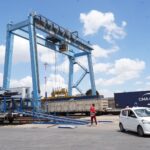
- Construction of a new Kisumu Port to enhance cargo handling.
- A railway corridor that spans 70 meters along the main line and 100 meters within station areas. tem S
PROJECT BENEFITS: The project is expected to:
- Improve the regional integrated transportation network
- Promote regional connectivity and integration
- Enhance cross-border connectivity
- Stimulate rapid regional and national economic growth
- Boost the tourism industry
- Create employment opportunities for local communities
- Support blue economy activities, especially around Lake Victoria